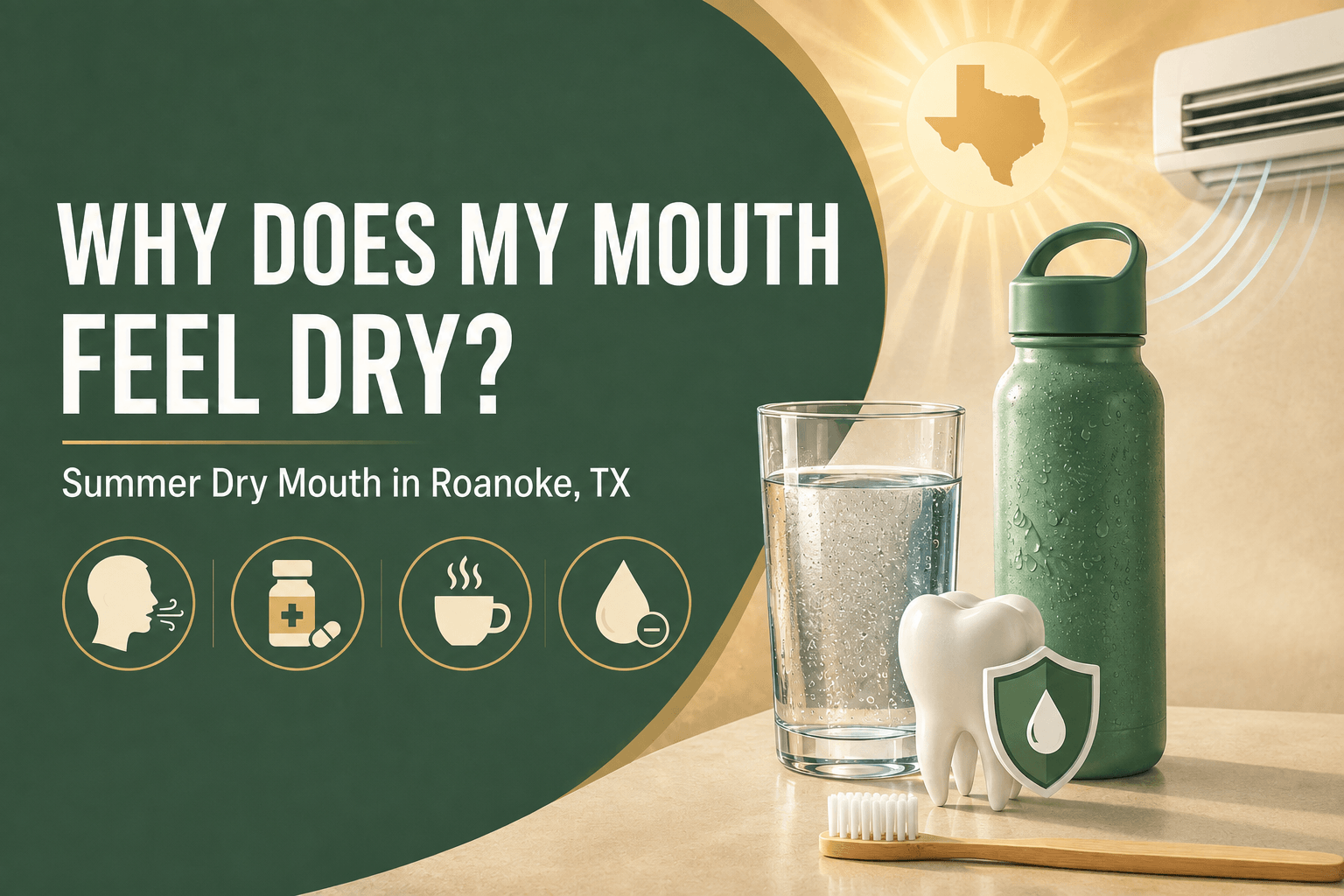
Your mouth may still feel dry after drinking water because dry mouth is not always just a hydration problem. Sometimes the salivary glands do not make enough saliva, or daily habits, medications, mouth breathing, heat, or health conditions affect moisture in the mouth. When dryness keeps coming back, our Roanoke dental care team can help you understand what may be happening.
At Garden Valley Family & Cosmetic Dentistry, we often hear patients say, “I drink water all day, but my mouth still feels dry.” That can feel frustrating, especially during a hot North Texas summer when you are already trying to stay hydrated.
The good news is that dry mouth can often be managed once we understand what may be contributing to it.
What Is Dry Mouth, and Why Does Saliva Matter?
Dry mouth means your mouth does not have enough saliva to stay comfortably moist.
Saliva does more than keep your mouth from feeling dry. It helps rinse away food, supports chewing and swallowing, protects teeth from acids, and helps control odor-causing bacteria.
When saliva is low, you may have a higher risk of cavities, gum irritation, bad breath, plaque buildup, and oral infections. That is why we do not want patients to ignore persistent dry mouth, even if it seems mild at first.
Why Does Water Only Help for a Little While?
Water can help relieve dryness for a short time, but it may not fix the reason your mouth feels dry.
If something is reducing your saliva or drying out your mouth throughout the day, water may help for a few minutes and then the dryness comes back. This can happen if you breathe through your mouth, snore, take certain medications, spend long hours in air conditioning, or talk a lot during the day.
So while drinking water is still important, it may only be one part of the solution.
Common Causes of Summer Dry Mouth in Roanoke, TX
Summer dry mouth can happen for many reasons. In Roanoke and the wider North Texas area, hot weather can make dryness more noticeable, but local weather is not the only cause.
Common triggers may include:
- Hot temperatures and increased sweating
- Outdoor exercise, sports, yardwork, and summer activities
- Long hours in air-conditioned homes, offices, or vehicles
- Coffee, alcohol, energy drinks, sugary drinks, and salty foods
- Mouth breathing, snoring, allergies, or nasal congestion
- Tobacco use
- Not replacing fluids throughout the day
Dry mouth can also affect people who are already drinking plenty of water. That usually means we need to look beyond thirst and consider saliva, habits, medications, and oral health.
Can Medications or Health Conditions Cause Dry Mouth?
Yes, some medications may contribute to dry mouth. These can include certain allergy medicines, blood pressure medications, anxiety medications, antidepressants, decongestants, muscle relaxers, and pain medications.
Health factors such as diabetes, autoimmune conditions, cancer treatments, stress, anxiety, and mouth breathing may also play a role.
Please do not stop or change prescribed medication on your own. Talk with your physician or prescribing healthcare professional first. We can also help you think through the oral symptoms you are noticing and what questions may be worth asking.
Symptoms of Dry Mouth to Watch For
Dry mouth can feel different from person to person. Some patients only notice it at night, while others feel it all day.
You may notice:
- A sticky or dry feeling in the mouth
- Thick or stringy saliva
- Frequent thirst
- Bad breath
- Dry or cracked lips
- Burning tongue or mouth
- Trouble chewing, swallowing, or speaking
- Difficulty wearing dentures
- Tooth sensitivity
- More plaque or tartar buildup
If these symptoms keep happening, a dental visit can help us check for cavities, gum irritation, infection, enamel changes, or other effects of reduced saliva.
How Our Dental Team Can Help With Persistent Dry Mouth
Persistent dry mouth deserves attention because low saliva can affect both comfort and oral health.
During a dental evaluation, we may check your teeth, gums, soft tissues, bite, plaque levels, and areas where saliva may not be protecting the teeth well. We may also ask about your daily habits, medications, dry mouth symptoms, and when the dryness feels worse.
Routine dental exams and cleanings can also help us monitor buildup, tooth decay, and gum changes that may become more likely when saliva is reduced.
If we see signs of gum irritation, bleeding, or inflammation, we may also discuss gum therapy options based on what we find during your exam.
What Can I Do at Home for Dry Mouth?
Small daily changes may help manage dry mouth and support cavity prevention.
Try these simple steps:
- Take regular sips of water
- Chew sugar-free gum
- Use sugar-free lozenges
- Limit alcohol, tobacco, excess caffeine, and sugary drinks
- Use a humidifier, especially at night
- Breathe through your nose when possible
- Choose alcohol-free oral care products
- Brush twice daily with fluoride toothpaste
- Floss once daily
- Keep routine dental visits
If you use dry mouth products, follow the label directions. If dryness continues, we recommend scheduling an evaluation instead of guessing or trying too many products at once.
When Should I See a Dentist for Dry Mouth?
You should contact a dentist if dry mouth keeps coming back, affects eating or speaking, or comes with pain, sores, bad breath, bleeding gums, sensitivity, swelling, or frequent cavities.
Some patients also feel nervous about dental visits, especially if they have not been in for a while. We understand that. Our anxiety-free dental care page can help explain how we support patients who feel uneasy about coming in.
Key Takeaway
Dry mouth is not always a simple water problem. Heat, air conditioning, mouth breathing, medications, health conditions, and daily habits can all play a role.
If your mouth still feels dry after drinking water, our Roanoke dental care team can check for cavities, gum irritation, oral infections, tartar buildup, and other effects of reduced saliva.
FAQ
Why is my mouth dry even though I drink plenty of water?
Your salivary glands may not be making enough saliva, or medications, mouth breathing, dry air, or health conditions may be affecting moisture in your mouth. Water can help briefly, but it may not correct the cause.
Can air conditioning cause dry mouth?
Air conditioning can dry the air around you. If you spend long hours in AC, breathe through your mouth, or snore at night, your mouth may feel drier.
Which medications commonly contribute to dry mouth?
Some allergy, blood pressure, anxiety, antidepressant, decongestant, muscle relaxer, and pain medications may contribute. Talk with your physician before stopping or changing any medication.
Can dry mouth cause cavities?
Dry mouth can increase cavity risk because saliva helps wash away food, buffer acids, and protect enamel. When saliva is low, plaque, acids, and bacteria may stay on teeth longer.
When should I see a dentist for dry mouth?
Schedule an evaluation if dryness keeps returning or comes with bad breath, sensitivity, bleeding gums, sores, swelling, pain, or frequent cavities.
A Local, Low-Pressure Next Step
If you live or work in Roanoke, TX, and your mouth still feels dry after drinking water, you do not have to figure it out alone.
Our team can check for signs of reduced saliva, cavities, gum irritation, oral infections, and other concerns. To take the next step, you can contact Garden Valley Family Dentistry and schedule an evaluation.
Medical Disclaimer: We provide this article for general education only. It is not a substitute for personalized dental or medical advice, diagnosis, or treatment from a licensed healthcare professional.