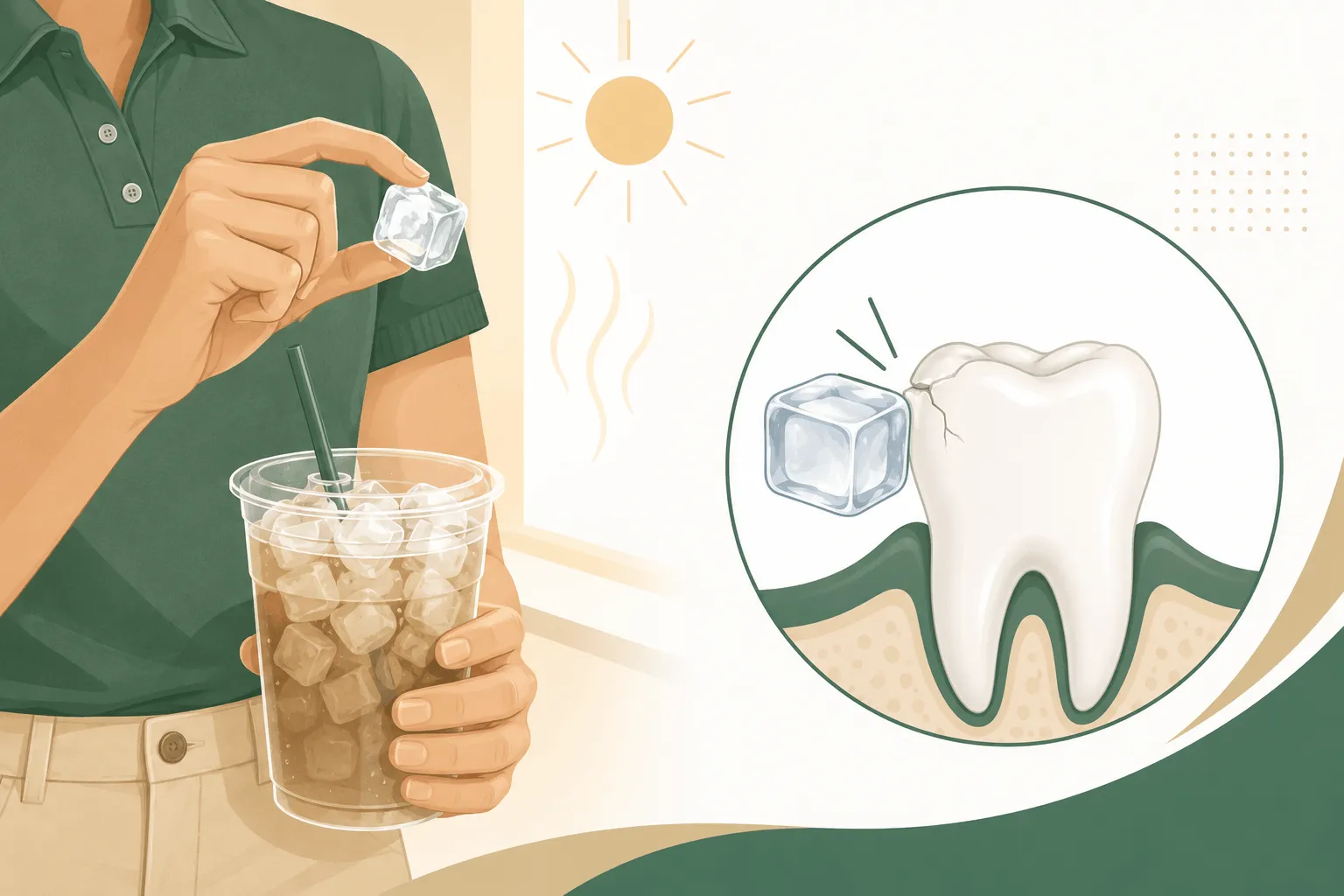
It’s August in Roanoke, Texas, and cold drinks are everywhere. Maybe you finish an iced coffee, crunch the leftover ice, grab a snow cone with the kids, or chew ice from a cold drink just to cool down.
So, does chewing ice damage your teeth? Yes, it can. Ice is hard enough to place too much pressure on tooth enamel, fillings, crowns, and already sensitive teeth. It may seem harmless, but repeated crunching can lead to cracks, chips, damaged dental work, or tooth sensitivity.
As a dentist, Roanoke TX patients visit for everyday concerns like this, we want to explain what can happen, what warning signs to watch for, and what you can do instead.
Why Do Some People Chew Ice?
Chewing ice is common, especially during hot Texas afternoons. Some people like the cold feeling. Others enjoy the crunch. For some, it becomes a habit during work, driving, studying, or sitting outside at a game.
Common reasons include:
- Trying to cool down
- Stress or boredom
- Enjoying the texture
- Habit after finishing iced coffee or soda
- Wanting something to chew without eating food
Frequent or compulsive ice chewing may sometimes be linked with iron deficiency or pica, which is a pattern of craving non-food items. We cannot diagnose that from a dental visit alone. If you feel a strong, ongoing urge to chew ice, it may be worth talking with both our dental team and your medical provider.
Can Chewing Ice Damage Your Teeth?
Yes. Chewing ice can damage teeth because ice does not soften like most foods. Your teeth are strong, but they are not made to crush hard objects over and over.
Our preventive dental care can help us check for early signs of wear, cracks, and sensitivity before small concerns become more uncomfortable.
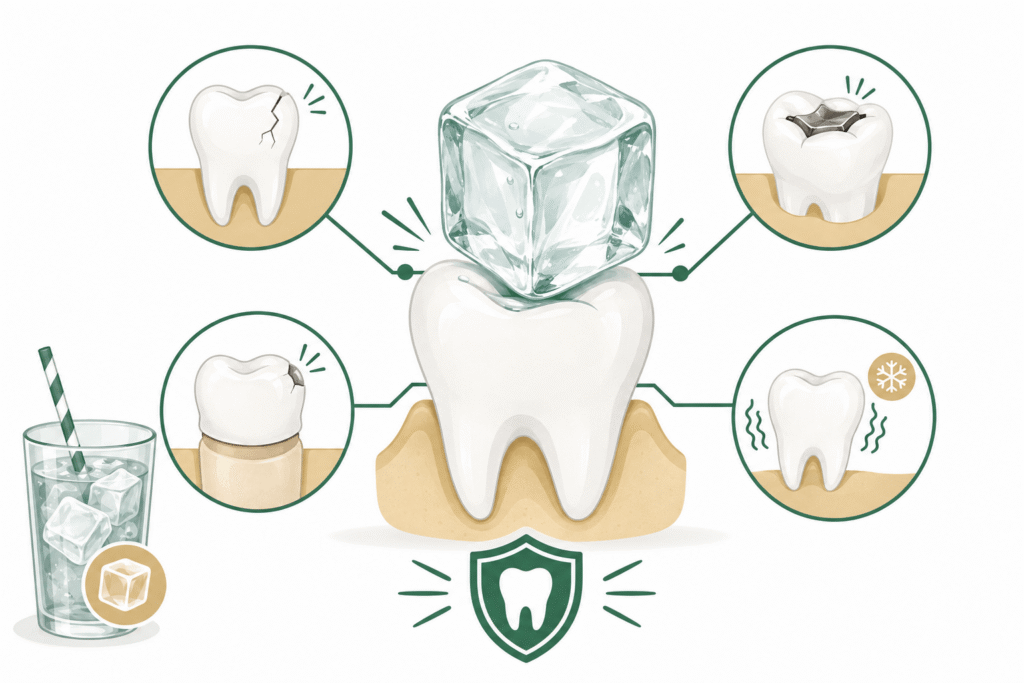
Cracked or Chipped Enamel
Enamel is the hard outer layer of your tooth. It protects the softer layers underneath, but it is not indestructible.
When you bite down on ice, especially thick cubes, the pressure can cause tiny cracks or chips. Some cracks are easy to notice because the tooth feels rough or sharp. Others may be too small to see at first but can still cause pain later.
Damaged Fillings, Crowns, or Dental Work
Ice can be especially hard on existing dental work. Older fillings, crowns, and other restorations may loosen, chip, or crack under repeated pressure.
If you already have a large filling or crown, chewing ice can stress the tooth and restoration around it. Our restorative dental care may help evaluate damaged crowns, fillings, or teeth after a complete exam.
A damaged filling should also be checked. Our tooth-colored fillings can be a helpful page to link for patients who need information about replacement fillings.
Tooth Sensitivity
Tooth sensitivity after chewing ice can happen for several reasons. Worn enamel, small cracks, exposed dentin, gum recession, or existing decay may make teeth react to cold drinks, sweets, or biting pressure.
Sensitivity does not always mean something serious is happening, but it should not be ignored if it keeps coming back.
Gum or Soft-Tissue Injuries
Sharp ice pieces can also irritate or cut the gums, cheeks, lips, or tongue. These small injuries may sting, bleed slightly, or feel sore for a day or two.
If swelling, pain, or bleeding continues, it is best to contact a dental professional.
Warning Signs Roanoke Patients Should Not Ignore
Small cracks are not always visible in the mirror. A tooth may look normal but still feel different when you bite.
Please call us if you notice:
- Sudden pain when biting
- New sensitivity to hot or cold temperatures
- A rough, sharp, or uneven tooth edge
- Pain that comes and goes
- A loose or damaged filling
- Discomfort around a crown
- Swelling or persistent tooth pain
If pain is severe, swelling appears, or a tooth breaks, our urgent dental care may help patients understand when to seek prompt evaluation.
What Should You Do Instead of Chewing Ice?
Breaking the habit can take time, especially if you regularly drink iced coffee, sweet tea, soda, or cold water throughout the day.
Try these simple swaps:
- Let ice melt instead of chewing it
- Order drinks with less ice
- Choose chilled drinks without ice
- Drink through a straw, but avoid biting it
- Pick softer snacks when you want texture
- Throw away leftover ice after the drink is gone
- Use sugar-free gum when appropriate
If the habit feels hard to stop, start with one situation. For example, remove the leftover ice from your cup after finishing your iced coffee. Small changes can help.
When Should You Visit a Dentist Roanoke TX Patients Can Trust?
Schedule an evaluation if you notice tooth pain, sensitivity, a chipped tooth, a rough edge, or damage to a filling or crown. You should also call if a tooth hurts when biting or if cold drinks suddenly feel uncomfortable.
As a dentist Roanoke TX families can turn to, our team may check for enamel damage, cracks, bite-related pain, sensitivity, and the condition of existing restorations. We cannot recommend a specific treatment until we examine the tooth, but we can help you understand what may be going on.
Our schedule for a dental evaluation can be used near this section for patients ready to reach out.
Frequently Asked Questions
Is chewing soft or melted ice safer for teeth?
Soft or mostly melted ice is usually less forceful than hard cubes, but chewing any ice can still place pressure on teeth. If you are trying to stop the habit, letting ice melt fully is the safer choice.
Can chewing ice break a filling or crown?
Yes, it can. Ice may loosen, chip, or crack fillings, crowns, and other dental work, especially if they are older or already weakened. If something feels loose, sharp, or uncomfortable, schedule an exam.
Why are my teeth sensitive after chewing ice?
Sensitivity may come from worn enamel, tiny cracks, exposed dentin, gum recession, or an existing dental problem. If sensitivity keeps happening after cold drinks or biting, it is a good idea to have the tooth checked.
Conclusion
Chewing ice may feel refreshing during a hot Roanoke afternoon, but repeated crunching can lead to cracked enamel, damaged fillings, crown problems, gum irritation, and tooth sensitivity.
At Garden Valley Cosmetic Dentistry, we want patients to feel informed, not worried. If you are experiencing pain, sensitivity, a chipped tooth, or problems with a filling or crown, our team is here to help. Contact us for an evaluation with a dentist Roanoke TX patients can visit for clear guidance and gentle care.